California operator career paths
Explore the progression from entry-level operator to senior technical or supervisory responsibility across four distinct certification ladders.
Drinking water treatment (T1–T5)
State Water Resources Control Board — Drinking Water Operator Certification Program
Treatment operators run the plants that make water safe to drink. The ladder starts at T1 and climbs to T5, with each grade adding technical depth, more responsibility, and in most cases a requirement to hold the grade below it first.
Entry-level treatment operator
No prior certification required. High school diploma or equivalent, plus the exam.
Second-level treatment operator
Specialized training or equivalent coursework is the usual route to sitting this exam without starting at T1.
Journey-level treatment operator
Requires a T2 certificate plus qualifying operating experience.
Supervisor-level treatment operator
Requires a T3 certificate, more experience, and additional education.
Chief operator, largest facilities
The top of the treatment ladder, for the state's largest treatment plants.
Water Treatment Exam Prep — Grade T1
Everything on the T1 exam outline, taught from the ground up for operators sitting their first drinking water treatment exam.
Water Treatment Exam Prep — Grade T2
A full review of treatment processes, water quality regulations and plant math at the depth the T2 exam expects.
Water Treatment Exam Prep — Grade T3
Journey-level review covering advanced process control, regulatory detail and the calculations that separate T3 candidates from T2.
Water Treatment Exam Prep — Grade T4
Supervisor-level preparation: advanced treatment, optimization, regulatory reporting and the management topics the T4 exam covers.
Water Treatment Exam Prep — Grade T5
The most advanced drinking water treatment review we offer, built for operators running the largest treatment facilities in the state.
Water distribution (D1–D5)
State Water Resources Control Board — Drinking Water Operator Certification Program
Distribution operators keep treated water safe and available all the way to the customer. D1 and D2 have no experience requirement, which is why many operators test straight into D2 and start their career a grade higher.
Entry-level distribution operator
No experience requirement — you can sit the D1 exam right away.
Second-level distribution operator
Also has no experience requirement, so many operators test straight into D2.
Journey-level distribution operator
Requires a D2 certificate plus qualifying distribution experience.
Supervisor-level distribution operator
Requires a D3 certificate, additional experience and education.
Chief operator, largest systems
The top distribution grade, for the largest systems in California.
Distribution Exam Prep — Grade D1
A plain-language introduction to distribution system operation for operators taking the D1 exam.
Distribution Exam Prep — Grade D2
Storage, pumping, cross-connection control, water quality and distribution math at D2 depth.
Distribution Exam Prep — Grade D3
Journey-level distribution review: hydraulics, water quality management, regulations and system-wide troubleshooting.
Distribution Exam Prep — Grade D4
Supervisor-level preparation covering system planning, compliance oversight and the management content on the D4 exam.
Distribution Exam Prep — Grade D5
Our most advanced distribution review, written for operators responsible for the largest systems in California.
Wastewater treatment (Grade I–V)
State Water Resources Control Board — Wastewater Operator Certification Program
Wastewater plant operators protect the receiving waters everyone downstream depends on. The grades run from I to V, and the grade a facility requires depends on the plant’s classification, not just its size.
Operator-in-training through Grade I
Entry point into wastewater treatment plant operation.
Wastewater Treatment Exam Prep — Grade I
A clear introduction to wastewater treatment for operators taking the Grade I certification exam.
Wastewater Treatment Exam Prep — Grade II
Secondary treatment, solids handling, laboratory work and process control calculations at Grade II depth.
Wastewater Treatment Exam Prep — Grade III
Journey-level review of nutrient removal, digestion, permit compliance and advanced process control.
Wastewater Treatment Exam Prep — Grade IV
Supervisor-level preparation covering advanced treatment, energy management and the compliance responsibilities of a chief operator.
Wastewater Treatment Exam Prep — Grade V
The highest level of wastewater treatment review we offer, for operators running the state's largest facilities.
Collection systems (Grade 1–4)
California Water Environment Association
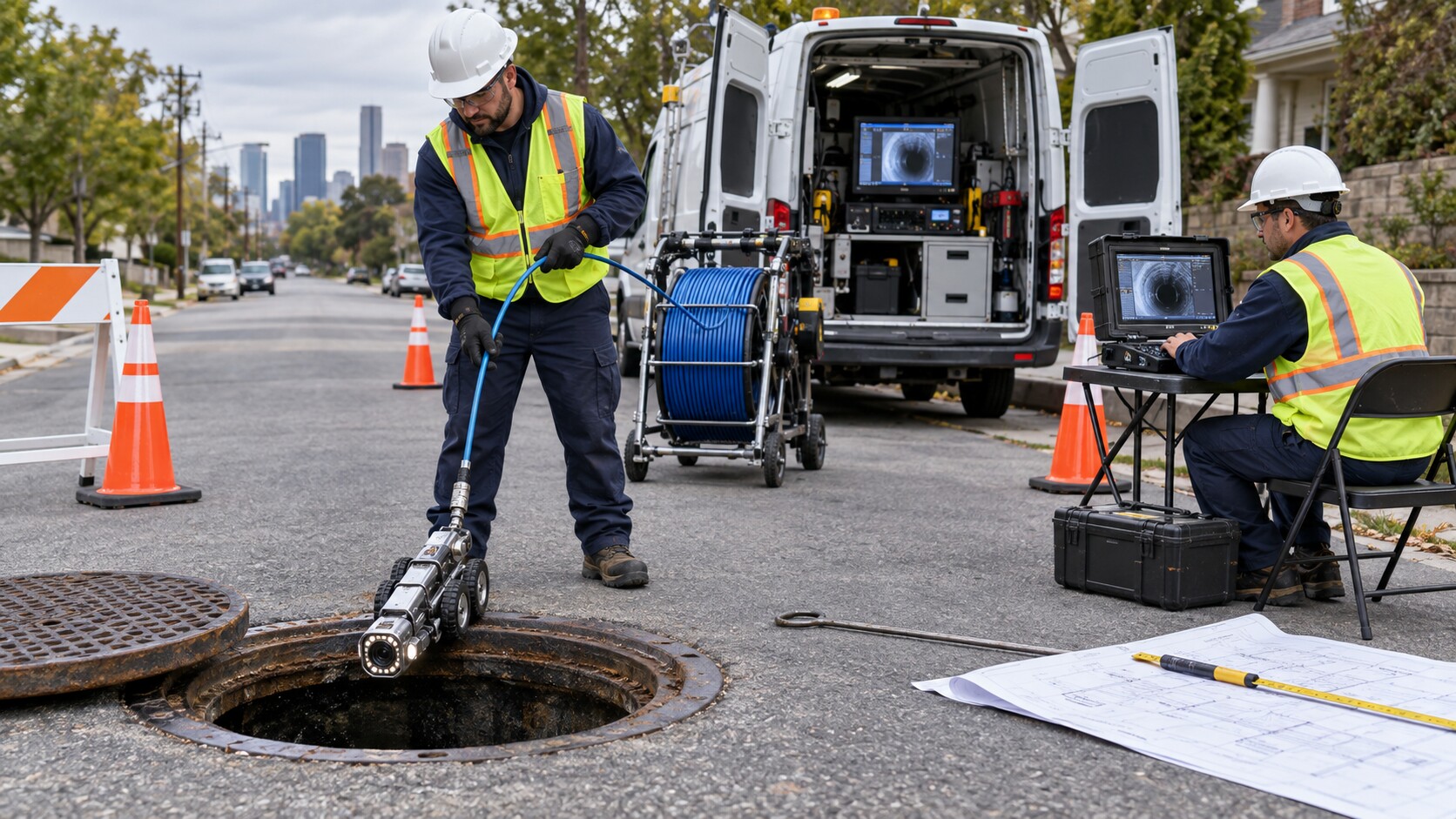
Collection system maintenance is certified through CWEA rather than the State Water Board. The four grades track increasing responsibility for cleaning, inspection, rehabilitation and, at Grade 4, supervision of a crew.
Collection System Maintenance Grade 1
Entry-level collections certification through CWEA.
Collection System Maintenance Grade 4
Supervisory level, the highest CWEA collections grade.
Collection Systems Exam Prep — Grade 1
Entry-level collection system maintenance review aligned to the CWEA Grade 1 exam.
Collection Systems Exam Prep — Grade 2
Cleaning methods, CCTV inspection, lift station work and SSO response at Grade 2 depth.
Collection Systems Exam Prep — Grade 3
Journey-level collections review covering rehabilitation, preventive maintenance planning and regulatory reporting.
Collection Systems Exam Prep — Grade 4
Supervisor-level preparation for the highest CWEA collection system maintenance grade.
Moving into supervision
Every ladder eventually stops being about process and starts being about people, budgets and compliance. These courses cover that transition.
Utility Supervision Essentials
The first step out of the field: running a crew, holding people accountable and keeping a safety culture intact.
Utility Planning & Budgeting
Operating budgets, capital planning, rate structures and asset management for utility supervisors and managers.
Regulatory Compliance & Reporting
What your utility owes the State Water Board and when, and how to keep the paperwork defensible.
Ready to take the next step?
Pick the grade you are working toward and start today. All course sales are final. WasteWater College does not provide refunds except where a refund is required by applicable law. Course pages also list the curriculum, contact hours, price, access period, and classroom availability before enrollment.